How to retrofit an air source heat pump:
Air source heat pumps are becoming increasingly popular, not just in new build properties but also in existing homes up and down the country. In fact, you may well be one of the thousands of households who are asking themselves whether a heat pump is right for them. So let’s delve deeper into the topic of retrofitting heat pumps and hopefully answer some of the common questions homeowners have about air source heat pumps.
How do heat pumps work?
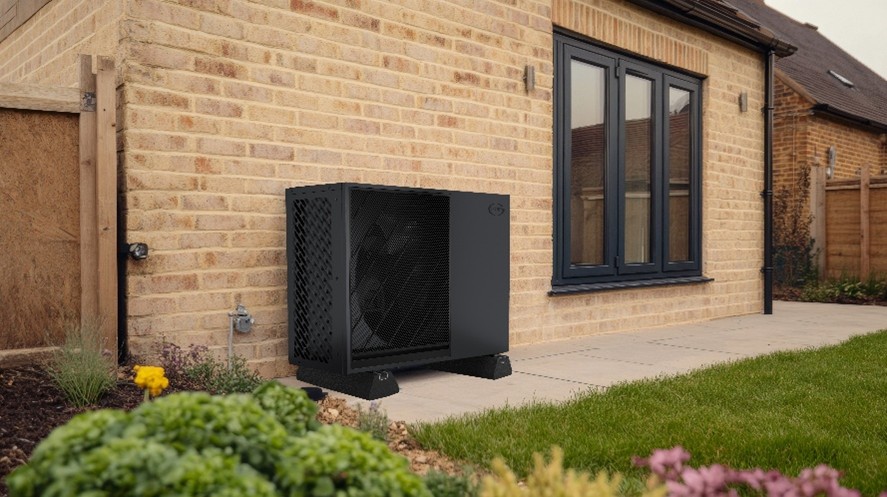
A good place for us to start is to explain how air source heat pumps work and how they can keep your rooms warm and provide hot water. Located outside your home, an air source heat pump draws in air and transfers it over an evaporator inside the heat pump unit. Here, a liquid refrigerant (usually R32 or R290) is exposed to the air and the refrigerant boils off to a gas, subsequently absorbing the latent heat energy in the air. This gas is then passed through a compressor where the heat content in the refrigerant is increased, before it then passes through a heat exchanger. In the heat exchanger, the gas condenses back to a liquid while transferring the heat to the heating system water.
The heated up system water then exits the heat pump and it is circulated through the central heating system, warming up your radiators or underfloor heating and providing hot water. For the provision of your hot water, you will need a separate cylinder which is compatible with heat pumps – the system water then heats up the water contents of your heat pump cylinder and stores this ready for when there is a domestic hot water demand at your taps.
Air source heat pumps are more eco-friendly than a traditional oil or gas boiler because they do not burn fossil fuels. As a sustainable source of heating, it is not a surprise why uptake of this renewable technology is increasing, helping us all make steps to reduce our carbon footprints.
Can I retrofit a heat pump?
Contrary to some myths, heat pumps are suitable for lots of different types of homes and not just modern properties. However, there are some important factors that need to be thoroughly assessed when determining what heat pump your home will need. This will include looking at the age and size of your property, the type of building material it is made out of, how much insulation you have, and calculating your heating and hot water demand as a household.
As with any heating system, it must be correctly designed and appropriately sized to suit your home. Smaller or highly insulated homes will normally require a heat pump with a smaller heating output. Whereas larger homes or those which have higher heat losses, will tend to need a larger heat pump model which is capable of producing more heat.
Making your home as energy efficient as possible is a good thing to do, whether or not you are thinking of an air source heat pump. However, with heat pumps, it is important to minimise the amount of the heat energy that can escape from your home. This is because air source heat pumps are low temperature heating systems, meaning that the temperature of the water flowing through the system is lower than a traditional boiler system. Typically, a heat pump system will have a flow temperature of between 35ºC to 55ºC compared to a high temperature boiler operating at temperatures around 70ºC. This does not mean that a heat pump will not keep your home warm – far from it. Provided it is sized accurately, your heat losses are minimised and your heat emitters have been specified correctly (we will touch on radiators shortly), your rooms will be as warm as you want them to be.
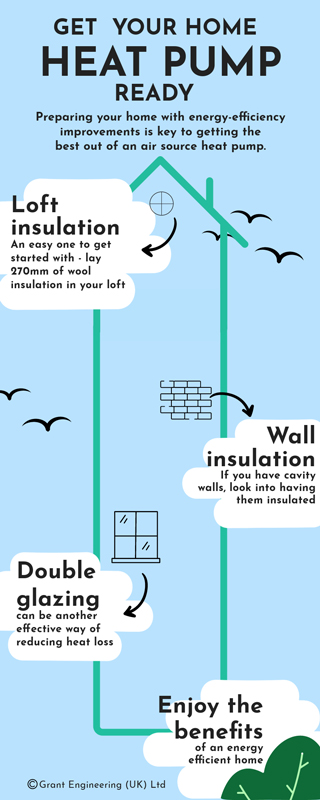
Some of the recommended energy efficiency measures which complement a heat pump system may already be installed in your home. They include:
• Cavity wall insulation
• Loft insulation
• Double or triple glazed windows.
If you are interested in reading more about how you can make your home more energy efficient, please read Grant UK’s blog called ‘Getting your home heat pump ready’. The handy infographic below also shares some useful information about home insultation.
What does a heat pump installation involve?
Every heat pump installation is different because the requirements of individual homes will vary. It is also worth noting that a heat pump installation is not the same as a boiler replacement installation. As mentioned above, a heat pump operates differently to a conventional boiler system and it is essential that a heat pump system is thoroughly designed and suitably specified to ensure it can fulfil all your home heating and hot water requirements.
While every heat pump installation will be different, there are some core steps which take place in every retrofit heat pump installations which we have outlined below.
• Carry out a thorough heat loss calculation of your property – BRC will complete this step when quoting you for a heat pump. This calculation will involve assessing every room in your home, working out its size, its heat loss and insulation levels which will confirm the heating demand of your home.
• Accurate system design – once the room by room heat loss calculation has been completed, BRC will then be able to advise you of the correct heat pump output you need, which could be a 4kW Aerona 290 heat pump or one of the larger Grant R290 heat pumps, such as the 15.5kW Aerona 290 model. We will also confirm the size of hot water cylinder you will require and any changes which may need to be made to your radiators or pipework.
• Installation of your heat pump heating system – once you have approved your quotation, your air source heat pump will be installed which, depending on the changes that may need to be made to the rest of your system, could take from two days up to a week or more.
• Handover of your new heat pump system – it may sound obvious but the customer handover is one of the most important steps of a heat pump installation. This involves your installer showing you through your new system, helping you to understand how it works and ensuring you are confident with how the controls are set up and can be used.
There is quite a lot to think about when it comes to a heat pump installation but by working with your installer, and with manufacturer support from Grant UK, you can enjoy a new low carbon heating system for years to come. If you are interested in learning more about heat pump installation, the space needed to install one and the importance of a correctly sized heat pump, please read Grant UK’s blog on how to choose the right air source heat pump.
Will I need new radiators for a heat pump?
The answer to this will depend on the type of radiator you currently have. It may be possible that your existing radiators will be suitable to work alongside a heat pump. However, some radiators may not be appropriate either if they are too small or if they are a design of radiator which is not effective with low temperature systems. Speak to us at BRC Heating & Plumbing and we can discuss your options.
Financial support for heat pump installations
There are Government initiatives which are providing financial support to households looking to make the move to greener home heating. For example, the Boiler Upgrade Scheme (BUS) is available to eligible households in England and Wales, providing a grant of up to £7,500 if they change their fossil fuel boiler to an air source heat pump. Eligibility criteria must be met which includes the heat pump being MCS approved and all Grant air source heat pumps are. If you are interested in learning more about the Boiler Upgrade Scheme, please contact BRC Heating & Plumbing – we currently operate under an umbrella scheme for the Boiler Upgrade Scheme, which enables us to carry out scheme-compliant installations for our customers.
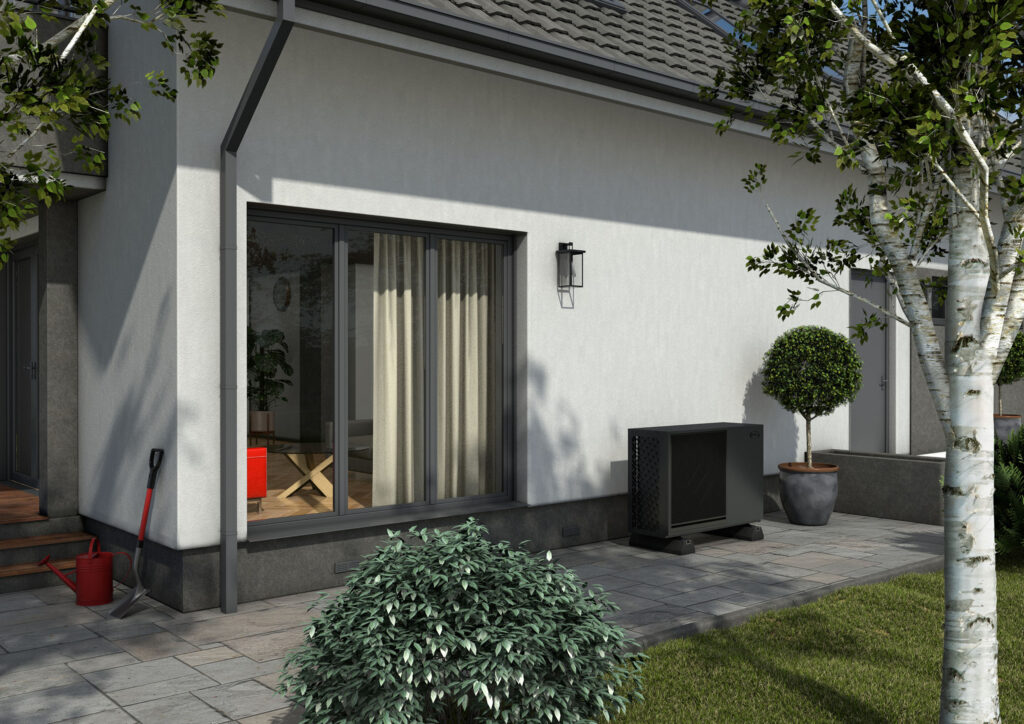
Living with a heat pump – some important differences to boilers
A correctly designed and installed air source heat pump will provide you with a reliable central heating system for many years. Living with a heat pump is different to living with a gas boiler so it is good to know what some of the key differences are, which include:
• Cooler radiators – your radiators will be cooler to the touch but be assured, your rooms will be warm provided the radiators have been sized correctly
• Controls – the settings on a heat pump system will be different to the schedules typically followed by a boiler so it is important that you work with your installer to understand how your heat pump controls have been set up, what settings you must not adjust and what settings you can change for your comfort
• Setback operation – to help a heat pump to operate at its best, it should not be switched off. Instead, during the night-time or unoccupied periods of the daytime, your room temperatures should be setback just a couple of degrees compared to your occupied temperatures. This will mean that the difference in room temperatures between occupied and unoccupied hours will be limited, supporting the heat pump’s efficient operation.
Head over to Grant UK’s YouTube channel to watch their Living with a heat pump video series to learn more.
Ready to take the next steps towards installing a heat pump at your home? Then please contact BRC Heating & Plumbing today! You can also discover more about Grant’s R290 heat pumps by clicking here.